
Why are the Zapotec rugs from Teotitlan del Valle so famous?
A small Zapotec town with a big textile reputation
If you spend time in Oaxaca, you quickly hear the name Teotitlan del Valle in conversations about textiles. The town sits in the Tlacolula Valley, not far from Oaxaca City, and weaving is not a side craft here, it is part of daily life. Many workshops are family homes first and studios second, so visitors can see how a rug is made while hearing the stories behind the patterns and colors.
The fame of Teotitlan rugs comes from a rare combination: durable wool weaving, deep knowledge of natural dyeing, and a design language that feels both ancient and current. Some visitors come looking for classic Zapotec grecas, others want a bold contemporary piece for a modern interior. Either way, the town’s reputation is built on skill that can be seen up close, not just claimed on a label.
Wool, pedal looms, and the craft of making something that lasts
Zapotec rugs from Teotitlan are typically woven from wool and made on sturdy pedal looms that produce a tight, hard wearing textile. The process is slow, and that pace is part of the quality. Preparing wool, spinning or refining yarn, setting up a loom, and weaving a clean, even surface all require time and practice. When you handle a well made rug, you feel the difference in weight, density, and finish.
Another reason these rugs are famous is consistency. In many workshops, the craft is taught from childhood, and each generation adds its own improvements while respecting what came before. Visitors often notice careful edges, balanced tension, and patterns that stay crisp rather than drifting across the field. These are small details, but they are exactly what turns a rug into a piece that can live in a home for years.
Natural dyes that connect rugs to the landscape of Oaxaca
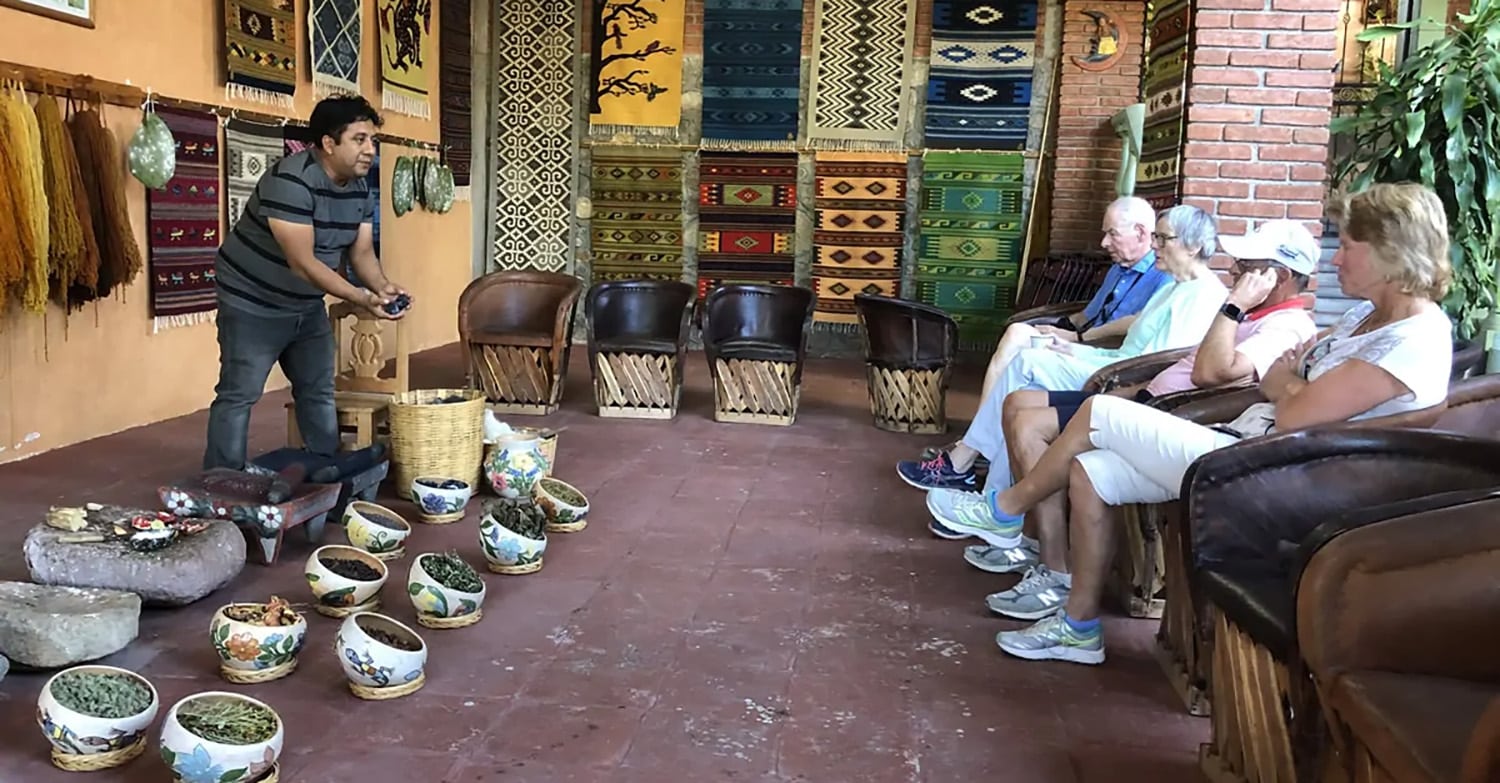
Color is the first thing most people remember about Teotitlan rugs, and natural dyes are a major reason why. In workshops that still dye traditionally, you may see cochineal used for reds and pinks, indigo for blues, and plants, bark, or local materials that create yellows, browns, and greens. The results tend to look deep rather than flat, and the shades shift subtly with light, which is one of the pleasures of living with a naturally dyed textile.
Dyeing is also where you understand how much knowledge sits behind a single color. Cochineal, for example, can move from warm red to purple or near black depending on the mordant and the recipe. Indigo requires careful preparation and timing. Some workshops even cultivate dye plants and materials as part of a larger commitment to self sufficiency and local ecology. When travelers call these rugs “art,” they are often responding to this invisible labor that turns raw fiber into a living palette.
Design traditions that feel both ancestral and modern
Teotitlan rugs are famous not only because they are well made, but because their designs carry a recognizable identity. Classic patterns often include Zapotec grecas and stepped fret motifs that echo the geometry you see across Oaxaca, including at sites like Monte Alban. These patterns work beautifully in modern spaces because they are structured, rhythmic, and confident without needing excessive decoration.
At the same time, many weavers also take on contemporary commissions and reinterpret motifs for new audiences. You might find rugs inspired by local flora, valley landscapes, or abstract compositions that still use traditional techniques. This balance, tradition in method and flexibility in design, is part of what keeps the town’s weaving culture visible worldwide rather than frozen in time.
Family workshops and cooperatives that keep the craft alive
A key reason Teotitlan del Valle became so well known is that visitors can meet the makers directly. Many studios welcome travelers for demonstrations, showing dyeing, loom setup, and weaving in the same place the family lives. This transparency builds trust, because you can ask what the rug is made of, how it was dyed, and how long it took to weave, then connect those answers to what you are seeing in front of you.
The town is also home to cooperatives and organized workshops that support artisans in different ways. Vida Nueva is widely recognized as a women’s weaving cooperative connected to Teotitlan del Valle, and its work is often described in the context of economic opportunity and community strength. Other projects emphasize natural dye cultivation and cultural preservation, including groups associated with cochineal production and dye plants. For travelers who care about impact, buying directly from a workshop or cooperative is one practical way to support the people who keep the tradition in motion.
If you want to do a little homework before visiting, some local makers share their story and process online, including workshops like Huella Carmín and other Teotitlan based textile projects that highlight their techniques and heritage. Reading these maker pages helps you arrive with better questions and a clearer sense of what “handmade” really means in this town.
How to choose a Teotitlan rug with confidence
The easiest way to buy well is to slow down and ask a few respectful questions. Is the rug wool, cotton, or a blend. Are the colors natural dyes, synthetic dyes, or mixed. What dye sources were used for the dominant colors, such as cochineal for reds or indigo for blues. A good workshop will usually explain this clearly and show you dye samples or wool in different stages.
Then look at the weave. A dense rug should feel substantial and even. Edges should lie flat, and the pattern should look intentional rather than warped by uneven tension. Finally, consider design and scale in your own space. A rug that feels “too bold” in a shop can look perfect at home once it has room to breathe. Teotitlan weavers understand this and often help visitors think through placement, light, and color harmony.
Why this tradition still matters for travelers in Oaxaca
The fame of Zapotec rugs from Teotitlan del Valle is not only about beauty or craftsmanship. It is also about continuity. In a world of fast production, Teotitlan offers a chance to see an entire textile culture functioning in real time, from dye knowledge to weaving skill to community organization. That is why visiting a workshop here often becomes a highlight of an Oaxaca itinerary, alongside markets, mezcal culture, and archaeological sites.
If you visit, go with curiosity and respect. Ask questions, listen to the answers, and remember that each rug represents a long chain of work. When you bring one home, you are not only buying a souvenir. You are carrying a piece of Oaxaca’s living craft tradition, made by people who have kept their skills sharp through patience, practice, and pride.
