

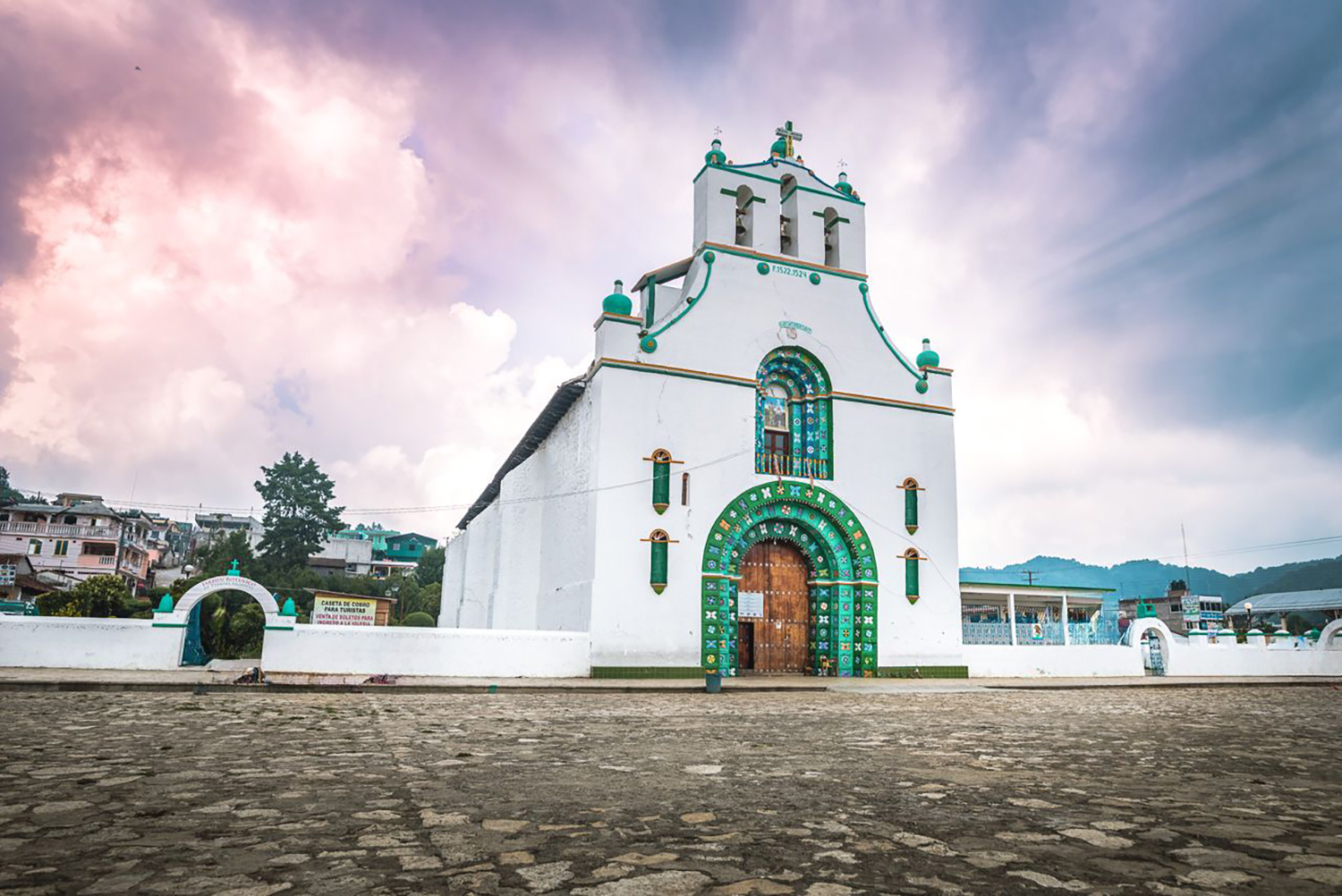
In the Chiapas highlands outside San Cristobal de las Casas, San Juan Chamula is not a theme stop or a quick photo opportunity. It is a Tzotzil Maya community with a strong tradition of local governance and ritual life that visitors are allowed to witness only on the town’s terms. Many travelers pass through southern Mexico on longer itineraries that include Oaxaca and Chiapas, but Chamula is a place where your behavior matters more than your checklist.
The simplest way to visit respectfully is to shift your goal from capturing to understanding. Move slowly, keep your voice low, and assume that some spaces are not for you, even if they are physically open. That mindset will make every other etiquette rule feel natural instead of restrictive.
Chamula is often described as an autonomous municipality that follows indigenous customs and community authority in daily life. Visitors will notice this in the way rules are enforced locally and in the expectation that outsiders comply without debate. Treat posted signs, staff instructions, and community requests as non-negotiable, even when they differ from what you have seen elsewhere in Mexico. :contentReference[oaicite:0]{index=0}
If you are unsure what is permitted, choose the conservative option. Do not enter private areas, do not interrupt rituals, and do not approach people as if they are part of an attraction. A respectful distance is not coldness here, it is good manners.
The Templo de San Juan Bautista is famous because the interior practice is not a standard Catholic service. Visitors commonly describe a dim space scented with copal incense, with pine needles on the floor and families praying beside candles and offerings. The correct posture as a guest is quiet observation: dress modestly, remove hats and sunglasses, and walk carefully to avoid stepping into someone’s prayer space. :contentReference[oaicite:1]{index=1}
You may see offerings that surprise you, including bottles of soda and local liquor used in household healing rites. Some travel accounts note that burping from carbonation is understood locally as a way to expel harmful influences, and that these offerings can be part of family-led rituals rather than a public ceremony. Whether or not you understand every detail, the respectful response is the same: do not stare, do not comment, and do not perform shock for your travel companion. :contentReference[oaicite:2]{index=2}
The most important practical rule in San Juan Chamula is the ban on photography inside the church, and often around rituals and religious leaders as well. Multiple guides warn that taking photos can lead to immediate confrontation, confiscation of equipment, fines, and detention. Do not test this, and do not assume you can ask for special permission in the moment. :contentReference[oaicite:3]{index=3}
Some visitors and local explanations describe the concern in spiritual terms, including the idea that an image can take something from the person photographed. Even if you frame it differently, the respectful approach is simple: keep your camera put away, especially indoors, and do not lift a phone during prayers or processions. If you want portraits in the market or plaza, ask clearly, accept no the first time, and never sneak a shot. :contentReference[oaicite:4]{index=4}
The plaza and market are social spaces, not just places to shop. When you browse textiles or souvenirs, keep your body language calm and friendly, and remember that bargaining is not a game when items represent hours of labor. A fair price and a respectful goodbye matter more than winning a discount, and a simple “No, gracias” is enough if you are not buying.
Chamula’s cemetery is also a living place, where families return to graves for remembrance and offerings, especially around Day of the Dead. Stay on paths, do not step on grave mounds, and keep distance if you encounter a family gathering. If you would not photograph a private moment at home, do not photograph it here.
Most visitors reach San Juan Chamula as a day trip from San Cristobal de las Casas, either by shared transport (colectivos) or taxi. If you go independently, plan to return before dark, carry small bills for local fees, and keep your passport stored securely while carrying a copy. If you prefer more context and less uncertainty, a reputable local guide can help you follow protocol without guessing.
More broadly, remember that travel advisories for Mexico often include state-by-state guidance and may change over time. Review official advice before your trip and use standard precautions like daylight travel, staying on main routes, and avoiding sensitive areas. :contentReference[oaicite:5]{index=5}
A respectful visit to San Juan Chamula is cultural diplomacy at human scale. You are stepping into a community that has protected its spiritual life through centuries of pressure, and that protection is still active today. If a rule feels strict, treat it as a boundary that keeps something meaningful intact.
Leave with fewer photos and more understanding. If you do, you will have supported the town’s right to define how it is seen, and you will have experienced one of the most distinctive cultural landscapes in southern Mexico with the care it deserves.